Gingivitis progresses through four pathological stages: initial, early, established, and advanced. Each stage reflects increasing inflammation in the gum tissue , from microscopic immune responses you can’t even feel, all the way to chronic swelling and bleeding that signals the doorstep of periodontitis. The good news? Every stage of gingivitis is still reversible with proper intervention. This guide walks you through each stage, how to self-assess your symptoms, and what treatments actually work.
What is Gingivitis?

Gingivitis is inflammation of the gingiva — the part of your gum that surrounds the base of your teeth. It’s the earliest form of gum disease, and it’s remarkably common. According to various epidemiological studies, some form of gingivitis affects over 50% of adults worldwide.
Here’s the thing most people miss: gingivitis doesn’t always hurt. You might notice a little pink in the sink when you spit after brushing, or your gums might look slightly puffier than usual. Maybe you don’t notice anything at all. That’s precisely what makes understanding gingivitis stages so important , by the time symptoms become obvious, you may already be several stages in.
The primary culprit is bacterial plaque, that sticky biofilm that accumulates along and below the gumline. When plaque isn’t removed through regular brushing and professional dental cleaning, the bacteria trigger an immune response in your gum tissue. That immune response is what we call gingivitis.
The 4 Pathological Stages of Gingivitis
In 1976, Page and Schroeder described gingivitis as a continuum of four histopathological stages. These stages describe what’s happening at a tissue level , beneath what you can see in the mirror. Understanding them gives you a much clearer picture of how gum disease actually develops.
Stage 1: The Initial Lesion
This stage begins within 2–4 days of plaque accumulation. Picture this: you’ve been slacking on flossing for a few days during a stressful work week. At the microscopic level, your body is already responding.
Blood vessels in the gum tissue dilate, and neutrophils (a type of white blood cell) migrate toward the bacterial plaque along the gumline. There’s a subtle increase in gingival crevicular fluid — the liquid that seeps from the space between your tooth and gum. Clinically? You probably won’t see or feel anything. No redness, no swelling, no bleeding. But the inflammatory cascade has already started.
Stage 2: The Early Lesion
After about 4–7 days of continued plaque buildup, the early lesion develops. Now the immune response intensifies. Lymphocytes (T-cells primarily) infiltrate the connective tissue, and collagen fibers adjacent to the junctional epithelium start to break down , roughly 60–70% of collagen in the affected area may be destroyed.
This is often when you first notice something. Your gums might look a bit redder. They might bleed slightly when you brush vigorously or during a dental exam. If you were to visit your dentist for general dentistry at this point, they’d likely note the early signs.
Stage 3: The Established Lesion
If plaque remains undisturbed for 2–3 weeks, the established lesion forms. B-cells and plasma cells now dominate the inflammatory infiltrate. The gum tissue becomes noticeably swollen, and the pocket between tooth and gum deepens — not because bone is lost (that hasn’t happened yet), but because the inflamed gum tissue swells and pulls away from the tooth.
Bleeding on brushing becomes more frequent. The gums may appear dark red or even slightly bluish. Many patients first seek treatment at this stage because the symptoms are hard to ignore. The critical point here: this is still gingivitis, not periodontitis, and it’s still reversible.
Stage 4: The Advanced Lesion
The advanced lesion represents the transition zone between gingivitis and periodontitis. Plasma cells dominate the tissue, and the inflammation extends into the alveolar bone and periodontal ligament. Once bone loss begins, we’ve crossed into periodontitis territory , and that’s not fully reversible.
Not everyone with an established lesion progresses to the advanced stage. Factors like genetics, smoking, diabetes, and immune status influence whether — and how quickly , this transition occurs.
| Stage | Timeline | Key Cellular Activity | Clinical Signs |
|---|---|---|---|
| 1 — Initial | 2–4 days | Neutrophil infiltration, vasodilation | None visible |
| 2 , Early | 4–7 days | Lymphocyte infiltration, collagen loss | Slight redness, occasional bleeding |
| 3 — Established | 2–3 weeks | Plasma cell dominance, pocket formation | Swelling, frequent bleeding, dark red gums |
| 4 , Advanced | Variable | Extension to bone/ligament | Deep pockets, potential bone involvement |
Clinical Classification: Types of Gingivitis
Beyond the pathological stages, dentists also classify gingivitis by its cause and presentation. The 2017 World Workshop on the Classification of Periodontal Diseases reorganized these categories, and here’s a simplified look:
- Dental biofilm-induced gingivitis: The most common type. Caused by plaque accumulation. This is what we’ve been discussing throughout this article.
- Non-dental biofilm-induced gingival diseases: These include conditions triggered by specific bacterial, viral, or fungal infections, genetic disorders, allergic reactions, or systemic conditions.
- Drug-influenced gingival enlargement: Certain medications — including some anti-seizure drugs, calcium channel blockers, and immunosuppressants , can cause gum overgrowth that mimics or complicates gingivitis.
- Hormonal gingivitis: Pregnancy, puberty, and menstrual cycle changes can amplify the gum’s inflammatory response to plaque. Pediatric dentistry teams frequently encounter puberty-related gingivitis in adolescents.
- Nutritional gingivitis: Severe vitamin C deficiency (scurvy) can cause gingival inflammation and bleeding independently of plaque levels.
The classification matters because treatment differs. Biofilm-induced gingivitis responds well to cleaning and improved hygiene. Other types may require addressing the underlying systemic cause first.
Gingivitis vs. Periodontitis: The Macro Stages
Think of gingivitis and periodontitis as chapters in the same story. Gingivitis is Chapter 1 — reversible, limited to the soft tissue. Periodontitis is Chapter 2 , involving bone loss, and only manageable, not fully reversible. Here’s how periodontitis itself progresses if gingivitis isn’t addressed.
Early Periodontitis
Gum pockets deepen to 4–5 mm (healthy is 1–3 mm). X-rays may show early bone loss — typically up to 15% of the supporting bone around affected teeth. You might notice persistent bad breath or gums that bleed easily during eating, not just brushing.
Moderate Periodontitis
Pockets reach 5–7 mm. Bone loss progresses to about 33%. Teeth may begin to feel slightly loose. This is the stage where many patients experience noticeable gum recession , teeth start “looking longer.” Professional gum treatment becomes essential here.
Advanced Periodontitis
Pockets exceed 7 mm. Bone loss surpasses 50%. Teeth become mobile and may shift position. Without intensive treatment, tooth loss is likely. At this point, treatment often involves surgical intervention, bone grafting, or extraction and replacement.
The takeaway is straightforward: addressing gingivitis early — ideally in its initial or early stages , prevents this entire progression.
Self-Assessment: Grading Your Symptoms
The Gingival Index (GI) Simplified
Dentists use the Gingival Index (Löe & Silness, 1963) to grade gum inflammation during clinical exams. While you can’t replicate a professional examination at home, understanding the scale helps you communicate more effectively with your dentist.
| GI Score | Description | What You Might Notice |
|---|---|---|
| 0 — Normal | No inflammation | Pale pink, firm gums; no bleeding |
| 1 , Mild | Slight color change, mild edema; no bleeding on probing | Gums look slightly redder than usual |
| 2 — Moderate | Redness, edema, glazing; bleeding on probing | Swollen, shiny gums; bleeding when brushing or flossing |
| 3 , Severe | Marked redness, edema, ulceration; spontaneous bleeding | Gums bleed on their own; significant swelling and tenderness |
Warning Signs You Should Never Ignore
Some symptoms demand immediate professional attention. Don’t wait for your next scheduled checkup if you experience any of the following:
- Spontaneous gum bleeding (without brushing or eating)
- Pus between teeth and gums
- A tooth that feels loose or has shifted position
- Persistent bad taste in your mouth despite good hygiene
- Gums pulling away from teeth, exposing root surfaces
- Pain when chewing or biting
Imagine this scenario: you’re eating an apple, and you notice blood on the fruit — not from biting your lip, but from your gums. That’s not normal, and it’s your body telling you something needs attention. Schedule a dental evaluation sooner rather than later.
Treatment & Reversal Protocol
Here’s where the story gets encouraging. Gingivitis , at any of its four pathological stages — is reversible. The tissue can heal, the inflammation can resolve, and your gums can return to a healthy state. But the approach differs depending on severity.
Professional Treatments
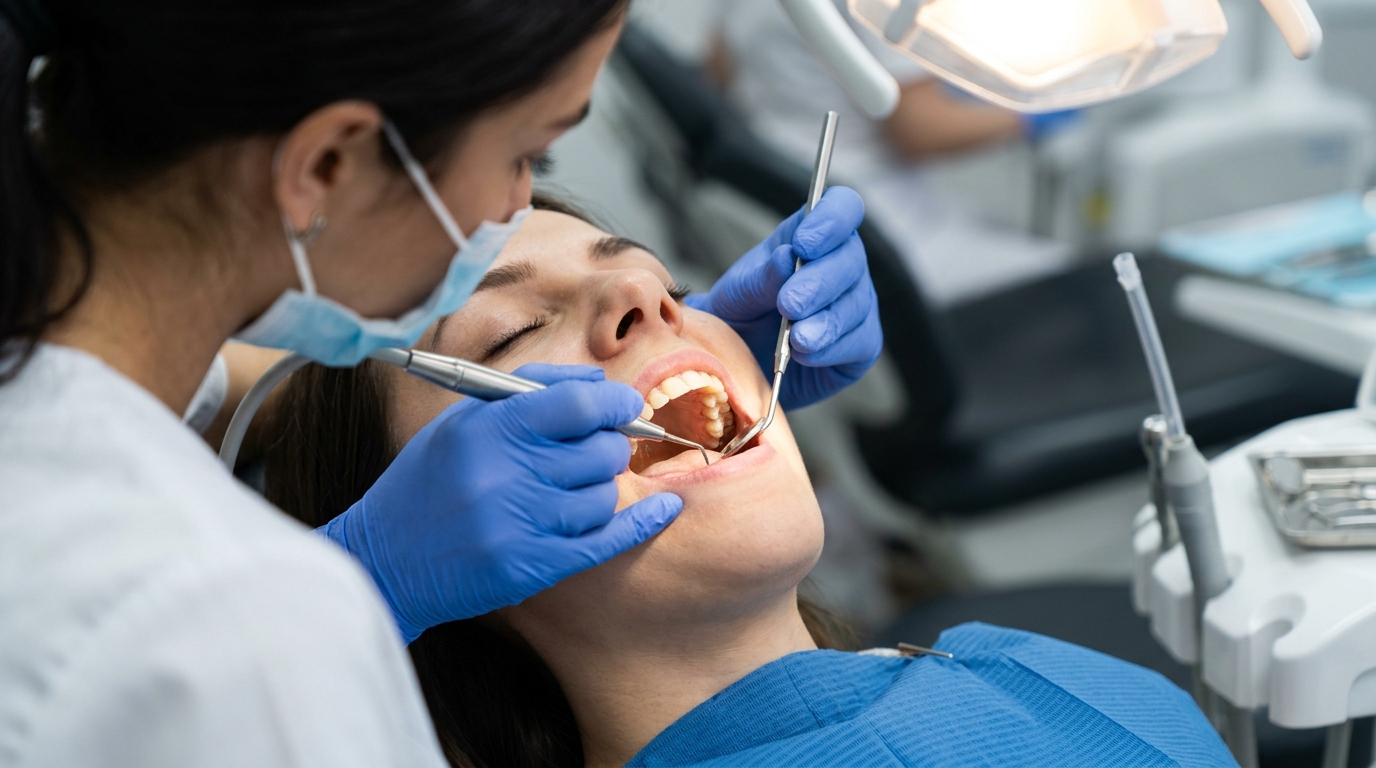
Scaling and root planing (deep cleaning): This is the gold standard. Your dentist or hygienist uses specialized instruments to remove plaque and calculus (hardened plaque) from above and below the gumline. Root planing smooths the root surfaces, making it harder for bacteria to reattach. For many patients, a single session of professional dental cleaning combined with improved home care is enough to resolve gingivitis entirely.
Antimicrobial therapy: In some cases, your dentist may recommend chlorhexidine mouth rinse or locally applied antibiotics to help control bacterial populations during healing.
Laser therapy: Some clinics offer diode laser treatment as an adjunct to scaling. Early evidence suggests it may reduce bacterial load and promote healing, though it’s not a replacement for mechanical cleaning.
Follow-up schedule: After initial treatment, most clinicians recommend follow-up visits every 3–6 months until gum health stabilizes.
Home Care Regime
Professional treatment only works if it’s backed by consistent home care. Here’s an evidence-based daily protocol:
- Brush twice daily for at least two minutes. Use a soft-bristled brush , medium or hard bristles can traumatize inflamed tissue. Electric toothbrushes with oscillating heads have shown slight advantages in plaque removal in several studies.
- Floss or use interdental brushes daily. Brushing alone reaches roughly 60% of tooth surfaces. The remaining 40% — the areas between teeth , are where gingivitis often begins.
- Consider an antimicrobial rinse. Chlorhexidine (short-term, as directed by your dentist) or a cetylpyridinium chloride rinse can help reduce plaque and gingivitis when used as a supplement to brushing and flossing.
- Don’t skip dental checkups. Even with excellent home care, professional cleaning removes calculus that brushing and flossing cannot.
A quick scenario: let’s say you’ve been diagnosed with Stage 3 (established) gingivitis. Your dentist performs a thorough cleaning, and you commit to flossing every night and brushing with a soft electric toothbrush. Within 2–3 weeks, studies show you can expect significant improvement in bleeding scores and gum color. Within 4–8 weeks, most signs of gingivitis can resolve completely.
Frequently Asked Questions (FAQ)
How long does it take to reverse gingivitis?
With proper professional cleaning and consistent home care, early-stage gingivitis can improve within 1–2 weeks. More established cases typically show significant resolution within 4–8 weeks. The key variable is compliance — patients who floss daily and brush correctly see faster results than those who don’t.
Is gingivitis contagious?
Gingivitis itself is not contagious, but the bacteria that cause it can be transmitted through saliva , for example, by sharing utensils or kissing. However, simply being exposed to these bacteria doesn’t mean you’ll develop gingivitis. Your immune response, oral hygiene habits, and other risk factors all play a role.
Does salt water help gingivitis?
Warm salt water rinses (about half a teaspoon of salt in 8 ounces of warm water) can temporarily reduce bacterial counts and soothe inflamed gums. Some studies suggest it may support healing after professional cleaning. However, salt water alone cannot remove plaque or calculus, so it should be viewed as a supplementary measure, not a primary treatment.
Can gingivitis cause bad breath?
Yes. The bacteria responsible for gingivitis produce volatile sulfur compounds (VSCs) as metabolic byproducts. These compounds — hydrogen sulfide and methyl mercaptan , are the same chemicals that give rotten eggs their smell. Treating gingivitis often resolves associated halitosis. If bad breath persists after gum treatment, other causes should be investigated.
What does healthy gum tissue look like?
Healthy gums are typically coral pink (though natural pigmentation varies with ethnicity), firm to the touch, and stippled — meaning they have a slight orange-peel texture. They fit snugly around each tooth, don’t bleed during brushing or flossing, and the papillae (the triangular points of gum between teeth) fill the spaces completely without appearing swollen or receded.
Conclusion
Understanding gingivitis stages transforms gum disease from a vague concern into something you can recognize, measure, and act on. Whether you’re dealing with the invisible immune response of the initial lesion or the visible swelling and bleeding of an established lesion, the critical fact remains: gingivitis is reversible at every stage.
The progression from gingivitis to periodontitis isn’t inevitable. It’s a preventable transition , one that hinges on regular professional care and daily home maintenance. If you’ve noticed any of the warning signs discussed in this article, don’t wait for them to escalate.
Book Your Gum Health Assessment at Mebadent
Catching gingivitis early is one of the simplest, most cost-effective things you can do for your long-term oral health. A quick evaluation and professional cleaning at our gum treatment clinic can put you back on track — often in a single visit.