Early periodontal disease is the stage where gum inflammation (gingivitis) starts destroying the bone and tissue around your teeth. The good news? Caught early, it can be managed and even reversed with professional cleaning, improved oral hygiene, and consistent follow-up. Red, swollen, or bleeding gums are the classic warning signs — but some people feel nothing at all. If you suspect something is off, schedule a periodontal evaluation before minor inflammation becomes irreversible bone loss.
Imagine this: you’re brushing your teeth before bed, and you notice a faint pink streak in the foam. You shrug it off , maybe you brushed too hard. A week later, the bleeding happens again. Then again. That small, easy-to-ignore sign could be your gums waving a red flag that something deeper is going on.
Early periodontal disease sits in a frustrating middle ground. It’s more serious than simple gingivitis, but it hasn’t yet caused the dramatic tooth loosening or bone destruction that defines advanced periodontitis. This is precisely why it’s so dangerous — and so treatable, if you act now.
In this guide, we’ll walk through exactly what early periodontal disease looks like, how it’s diagnosed, what treatments actually work, and what you can do at home starting tonight.
What Is Early Periodontal Disease?

Periodontal disease is a bacterial infection of the structures surrounding your teeth , gums, ligaments, and bone. “Early” periodontal disease refers to the initial stage where the infection has moved beyond surface-level gum inflammation and begun to affect the deeper supporting tissues. Dentists sometimes call this Stage I or Stage II periodontitis under the 2017 AAP/EFP classification system.
At this point, the damage is measurable but still modest. Pocket depths (the gaps between your gums and teeth) typically measure 4-5 mm, and there may be slight bone loss visible on X-rays. The critical thing to understand: this is the tipping point between fully reversible gum disease and permanent structural damage.
Gingivitis vs. Early Periodontitis
People often use “gingivitis” and “periodontitis” interchangeably. They shouldn’t. Gingivitis is inflammation limited to the gum tissue — no bone involvement. Early periodontitis means the infection has broken through the gum barrier and started attacking the bone and connective fibers anchoring your teeth.
| Feature | Gingivitis | Early Periodontitis |
|---|---|---|
| Bone loss | None | Mild (up to 15-20%) |
| Pocket depth | 1-3 mm (normal) | 4-5 mm |
| Reversible? | Fully reversible | Manageable; some damage may be permanent |
| Bleeding | Common | Common, sometimes spontaneous |
| Treatment | Professional cleaning + better hygiene | Scaling & root planing + ongoing maintenance |
Think of gingivitis as a warning shot. Early periodontitis is the moment the warning becomes real damage. If you’re already dealing with gum issues, professional gum treatment can help stabilize things before they progress.
The “Hidden” Damage: What’s Happening Beneath the Gums
Here’s what makes periodontal disease so sneaky: the visible gums might look only slightly inflamed, but underneath, bacteria are forming colonies in the pockets between tooth roots and bone. These bacteria produce toxins that trigger your immune system. Ironically, your body’s own inflammatory response does much of the damage , dissolving bone and breaking down the collagen fibers that hold teeth in place.
This process can unfold over months or years without obvious symptoms. By the time a tooth feels loose, you’re well past “early” disease.
7 Warning Signs You Have Early Periodontitis
Not every sign screams for attention. Some whisper. Here’s what to watch for:
- Gums that bleed when brushing or flossing — even mildly
- Red or purplish gum tissue instead of healthy coral pink
- Swollen, puffy gums that feel tender to the touch
- Persistent bad breath (halitosis) that doesn’t resolve with brushing
- Receding gum line , teeth look slightly longer than before
- A bad or metallic taste in your mouth, especially in the morning
- Mild tooth sensitivity to hot or cold, particularly near the gum line
Visual Clues: Color, Texture, and Recession
Healthy gums are firm, stippled (slightly bumpy like an orange peel), and pale pink. With early periodontal disease, gums often turn darker red, lose their stippled texture, and appear glossy or swollen. You may also notice slight recession — the gum pulling away from one or two teeth, exposing a thin strip of root surface.
Grab a mirror and pull your lip back. Compare the gum tissue around your front teeth to the tissue around your molars. Uneven color or height differences can be an early indicator.
Sensory Clues: Itchiness, Bad Taste, and Sensitivity
Some patients describe an itching or tingling sensation in their gums , almost like the tissue is irritated from the inside. Others notice a persistent sour or metallic taste, especially after waking up. These sensations often stem from bacterial byproducts and low-grade inflammation in the gum pockets.
Sensitivity to cold drinks or air near the gum line is another clue. Unlike cavity-related sensitivity (which is usually sharp and localized to one tooth), periodontal sensitivity tends to be more diffuse and linked to areas of recession.
Silent Symptoms: Why You Might Feel No Pain
Here’s the uncomfortable truth: early periodontal disease is often painless. The bone loss happens gradually, and gum tissue can adapt to chronic inflammation without sending strong pain signals. A 2018 study published in the Journal of Clinical Periodontology found that nearly 47% of adults over 30 had some form of periodontal disease — many without knowing it.
This is exactly why regular dental cleanings and check-ups matter. Your dentist can detect pocket depths and bone changes long before you feel anything.
Causes and Risk Factors
Bacterial plaque is the primary cause. When plaque isn’t removed daily, it hardens into tartar (calculus), which can only be removed professionally. But plaque alone doesn’t tell the whole story , several factors accelerate progression:
- Smoking or tobacco use: Reduces blood flow to gums and impairs healing. Smokers are 2-3x more likely to develop periodontitis.
- Genetics: Some people are genetically predisposed to stronger inflammatory responses, making their gums more vulnerable even with decent hygiene.
- Diabetes: Poorly controlled blood sugar increases infection risk and slows tissue repair.
- Hormonal changes: Pregnancy, puberty, and menopause can make gums more reactive to plaque.
- Medications: Certain drugs (anticonvulsants, calcium channel blockers, immunosuppressants) can cause gum overgrowth or dry mouth, both of which contribute to disease.
- Stress and poor nutrition: Chronic stress suppresses immune function; vitamin C and D deficiencies weaken gum tissue resilience.
- Crooked or crowded teeth: Hard-to-clean areas accumulate more plaque. General dentistry solutions can address alignment issues that contribute to gum problems.
How Early Periodontal Disease Is Diagnosed
Diagnosis involves three key assessments:
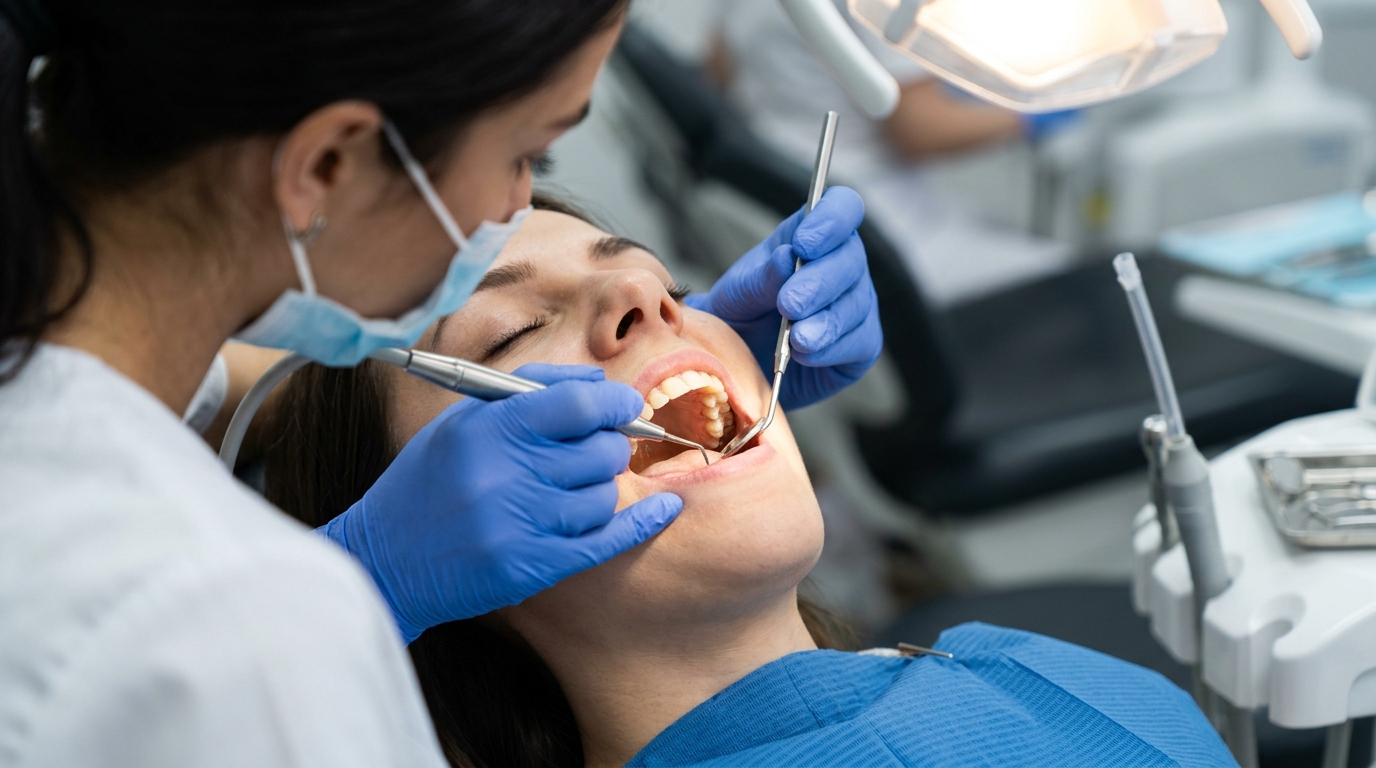
1. Periodontal probing: Your dentist or hygienist uses a thin probe to measure pocket depths around each tooth. Healthy pockets are 1-3 mm. Readings of 4-5 mm with bleeding on probing suggest early periodontitis.
2. Dental X-rays: Periapical and bitewing radiographs reveal early bone loss that isn’t visible to the naked eye. Your dentist will compare bone levels to the natural anatomy of the tooth root.
3. Clinical assessment: Gum color, texture, bleeding tendency, plaque and calculus deposits, tooth mobility, and recession are all documented. Some clinics use digital charting to track changes over time.
If you haven’t had a periodontal evaluation in over a year, it’s worth scheduling one — especially if you notice any of the warning signs listed above. You can book an evaluation at Mebadent to get a clear picture of where things stand.
Professional Treatment Options for Early Stages
The gold-standard treatment for early periodontal disease is scaling and root planing (SRP) , sometimes called a “deep cleaning.” This is different from a routine prophylactic cleaning. SRP involves removing tartar and bacterial deposits from below the gum line and smoothing the root surfaces so gums can reattach more tightly.
Here’s what a typical treatment plan looks like:
| Treatment Step | What Happens | Timeline |
|---|---|---|
| Initial evaluation | Probing, X-rays, risk assessment | Visit 1 |
| Scaling & root planing | Deep cleaning under local anesthesia (1-2 sessions) | Visits 2-3 |
| Re-evaluation | Pocket depths re-measured 4-6 weeks after SRP | Visit 4 |
| Maintenance therapy | Professional cleanings every 3-4 months | Ongoing |
| Adjunctive therapy (if needed) | Local antibiotics, laser therapy, or antimicrobial rinses | As prescribed |
In most early-stage cases, SRP combined with diligent home care brings pocket depths back to manageable levels within a few months. Surgery is rarely needed at this stage — that’s reserved for moderate-to-advanced disease where pockets remain deep despite non-surgical treatment.
For patients who’ve already experienced some bone loss and are considering long-term restoration options, implant dentistry is worth discussing with your treatment team, though stabilizing gum health always comes first.
The “At-Home” Rescue Protocol
Professional treatment gets you to baseline. What you do at home determines whether you stay there. Here’s a practical daily protocol:
- Brush twice daily with a soft-bristled or electric toothbrush. Angle the bristles at 45 degrees toward the gum line. Two minutes minimum.
- Clean between teeth daily , floss, interdental brushes, or a water flosser. Pick the tool you’ll actually use consistently.
- Use an antimicrobial or anti-gingivitis mouthwash as directed (more on this below).
- Don’t skip the tongue. Bacteria on the tongue contribute to plaque recolonization.
- Stay hydrated. Saliva is your mouth’s natural defense system.
Toolbox: Water Flossers vs. String Floss
Let’s settle this: both work. A 2019 meta-analysis in the Journal of Clinical Dentistry found that water flossers were slightly more effective at reducing bleeding and pocket depth in patients with gingivitis and early periodontitis compared to string floss. However, string floss is better at scraping off tightly adhered plaque from flat tooth surfaces.
The honest answer? Use whichever one you’ll use every single day. For people with deeper pockets (4-5 mm), a water flosser on a low-to-medium setting can flush bacteria from areas string floss can’t reach. If you want to be thorough, use both — interdental brushes for the tight spots, water flosser for the pockets.
The Role of Anti-Gingivitis Mouthwash
Mouthwash is not a substitute for mechanical cleaning, but it’s a useful adjunct. Look for products containing:
- Chlorhexidine (0.12%): The gold standard for short-term bacterial reduction. Typically prescribed for 2-4 weeks post-SRP. Can cause temporary staining with prolonged use.
- Cetylpyridinium chloride (CPC): Available over-the-counter, milder than chlorhexidine, suitable for longer-term daily use.
- Essential oil-based rinses: Products like Listerine have clinical evidence supporting their anti-plaque and anti-gingivitis effects.
Ask your dentist which type is appropriate for your situation. Post-treatment, chlorhexidine for a couple of weeks followed by a CPC or essential oil rinse for maintenance is a common recommendation.
Frequently Asked Questions (FAQ)
Can early periodontal disease be cured?
“Cured” is a tricky word in periodontology. Gingivitis , the precursor — is fully reversible. Once you cross into early periodontitis and bone loss has occurred, you can’t regenerate that bone naturally in most cases. However, with scaling and root planing, proper home care, and regular maintenance cleanings, the disease can be halted and pockets can shrink to healthy levels. Many patients with early-stage disease live the rest of their lives without further progression. The key is consistent gum treatment and follow-up.
Is early periodontitis contagious?
The bacteria that cause periodontitis can be transmitted through saliva , sharing utensils, kissing, etc. However, simply being exposed to these bacteria doesn’t guarantee you’ll develop the disease. Your immune response, oral hygiene habits, and genetic predisposition all play a role. Think of it this way: the bacteria are transferable, but the disease itself requires a susceptible host.
How long does it take for early disease to become advanced?
There’s no single timeline. In some people, early periodontitis can remain stable for years — especially with treatment. In others (particularly smokers, diabetics, or those with aggressive bacterial strains), progression to moderate or advanced disease can happen within 12-24 months without intervention. Regular monitoring is the only reliable way to track changes.
Does oil pulling help with periodontitis?
Oil pulling (swishing coconut or sesame oil for 15-20 minutes) has some evidence for reducing plaque and gingivitis markers, but the studies are small and low-quality. It should never replace brushing, flossing, or professional treatment. At most, consider it a supplementary practice , not a primary strategy for managing periodontal disease.
Can I treat this naturally without a dentist?
Once tartar (calculus) has formed below the gum line, no amount of brushing, flossing, or natural remedies will remove it. You need professional instrumentation. Attempting to manage early periodontitis without professional care is like trying to clean a stain that’s soaked through fabric — surface scrubbing won’t reach the problem. Improving home care is essential, but it works alongside professional treatment, not instead of it. Professional dental cleaning is a non-negotiable part of the process.
Conclusion
Early periodontal disease is a critical window. The inflammation has crossed the line from superficial to structural, but the damage is still limited enough to manage effectively. Scaling and root planing, consistent home care, and regular maintenance visits can stop progression in the vast majority of cases.
Here’s one last scenario to consider: picture yourself two years from now. In one version, you addressed the bleeding gums, got a deep cleaning, adjusted your brushing routine, and now your check-ups are uneventful. In the other version, you ignored the signs, and now you’re facing deeper pockets, potential tooth mobility, and more invasive treatment.
The difference between those two futures is a single decision , the one you make today.
Concerned About Your Gum Health?
Schedule a periodontal evaluation at Mebadent Clinic. Early intervention makes all the difference.