
 TR
TR
 EN
EN

- MebaDent
Do Temporary Fillings Cause Pain?
One of the most common worries our patients share with us at our Şişli clinic is this: "I had a temporary filling placed, and now my tooth is uncomfortable — is this normal, or is something wrong?" The honest answer is that temporary fillings can cause discomfort, but the cause and severity vary widely. Some pain is expected as the tooth settles; some signals a problem worth addressing. Let's walk through what we tell our patients in real life.
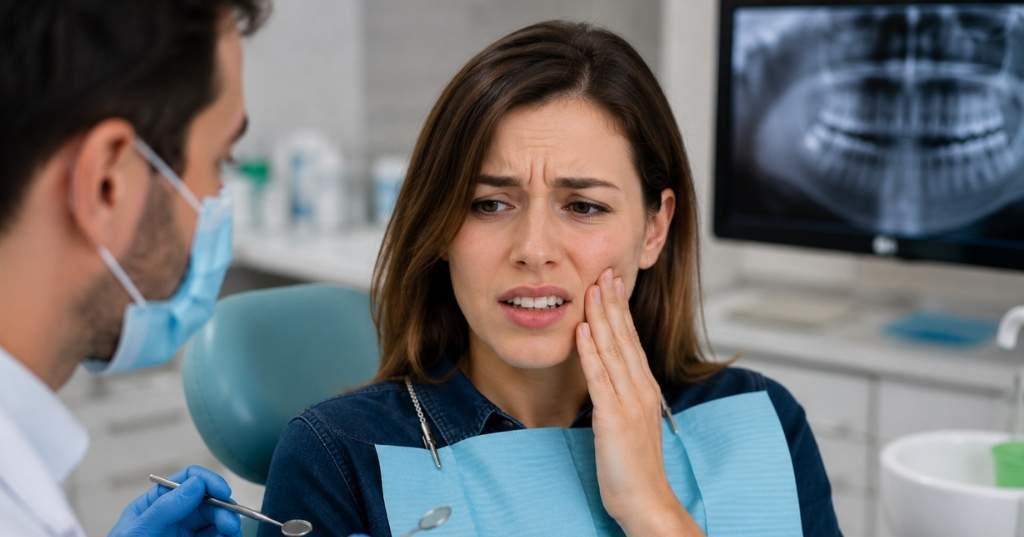
Do temporary fillings cause pain?
Temporary fillings can cause mild to moderate pain or sensitivity in the first 24-72 hours after placement, especially when chewing or with hot and cold foods. This discomfort is usually a normal part of the tooth adapting to the procedure. Persistent, sharp, or worsening pain after several days, however, suggests an underlying issue that needs evaluation.
What we observe in practice: most patients overestimate temporary filling pain in advance because they associate "temporary" with "rough" or "unfinished." In reality, the discomfort is often manageable with over-the-counter pain relievers and softer foods on the treated side.
Why might a temporary filling hurt?
Pain or discomfort after a temporary filling can come from several sources. Identifying which one helps us know what to do next.
- Nerve sensitivity: Drilling close to the dental nerve, even without exposing it, can leave the tooth temporarily sensitive. Usually settles within a few days.
- High bite (occlusal): The filling sits a fraction too high, so chewing puts extra pressure on the tooth. This is a common, easily fixed problem in a quick follow-up visit.
- Active inflammation or infection: If the cavity was deep and the nerve already irritated, the discomfort may continue while the body responds — sometimes requiring root canal treatment.
- Material sensitivity: Some temporary materials (like zinc oxide eugenol) have a sedative effect, but a few patients find them mildly irritating.
- Cold or hot sensitivity: Temporary fillings have less insulation than permanent restorations. Hot coffee or icy drinks can travel through the tooth more easily.
- Trapped air or contamination: Rare, but if the cavity wasn't fully dried before the temporary was placed, lingering moisture can cause discomfort.
- Loose or partly dislodged filling: If the material has shifted, food and bacteria can sneak underneath, leading to discomfort.
- Underlying tooth fracture: Sometimes pain is from a small crack in the tooth that the cavity was hiding.
What's normal — and what isn't
Here's the timeline we usually share with patients leaving our clinic with a temporary filling:
| Day | What's normal | What's not normal |
|---|---|---|
| Day 0 (procedure day) | Numbness wearing off, mild ache | Sharp pain that anaesthesia couldn't quiet |
| Day 1 | Mild sensitivity to cold and pressure | Throbbing pain at rest |
| Day 2-3 | Improving discomfort, occasional twinges | Pain that's getting worse |
| Day 4-7 | Most patients feel near-normal | Persistent ache or new swelling |
| Beyond Week 1 | Tooth feels stable, no pain | Any pain that comes back |
The pattern matters more than a single bad moment. A short twinge while drinking ice water on day two is normal. Throbbing pain that wakes you up at night is not.
Managing discomfort at home
For mild discomfort in the first few days, what we tell our patients to try:
- Over-the-counter pain relievers: Paracetamol or ibuprofen, as directed. Avoid placing aspirin directly on the gum — it can cause a burn.
- Avoid chewing on the treated side: Use the other side for the first 24-48 hours. This protects the temporary filling and reduces stress on the tooth.
- Skip extreme temperatures: Hot soup, ice water, and very cold ice cream can trigger sensitivity. Lukewarm foods are easier on a recently treated tooth.
- Be gentle when brushing: Use a soft-bristled brush and don't apply heavy pressure on the filling. Flossing around the filling is fine, but slide the floss out sideways rather than pulling up.
- Saltwater rinse: A warm saltwater rinse (half a teaspoon of salt in a cup of water) can soothe surrounding gums. Gentle swishing, not aggressive rinsing.
- Soft, mild foods for a day or two: Yoghurt, eggs, mashed vegetables, oatmeal. Skip hard, sticky, or extremely sweet foods.
What our patients have found most helpful in practice is staying consistent with one of the milder pain relievers for 24-48 hours rather than waiting for pain to peak.
When to call your dentist
Some signs mean the temporary filling needs another look. We ask patients to reach out promptly if:
- Pain is severe and doesn't respond to over-the-counter pain relievers
- Pain is throbbing, especially at rest or at night
- The filling feels rough, cracked, or has come loose
- You notice a foul taste or smell coming from the tooth
- The gum around the tooth is swollen or bleeding
- You develop a fever, sudden facial swelling, or feel generally unwell
- Pain spreads to the ear, jaw, or down the neck
- Cold sensitivity lasts more than 30 seconds after the cold source is gone
- Discomfort is getting worse after the third day instead of better
The principle: getting a small problem checked early is almost always easier than letting it grow. At our Şişli clinic, we'd rather see a patient for a brief adjustment than have them in pain for a week.
Why temporary fillings exist in the first place
Patients sometimes ask why their dentist didn't just place a permanent filling and be done with it. There are good reasons for using a temporary first:
- Between root canal visits: A temporary filling protects the tooth between the cleaning of the canal and the placement of the final restoration.
- Waiting for lab-made restorations: If you're getting an inlay, onlay, or crown made in a lab, a temporary keeps the tooth sealed and functional during the wait.
- Allowing inflammation to settle: When a tooth has had a deep cavity or trauma, your dentist may want to see how the nerve responds before committing to a permanent filling.
- Sedative effect: Some temporary materials contain ingredients that soothe an irritated nerve.
- Emergency situations: Temporary fillings can be placed quickly if a tooth needs immediate protection.
The key thing to know: a temporary filling is meant to be just that — temporary. Most should be replaced within a few weeks or whenever your dentist scheduled, not left for months.
What if the filling falls out?
Temporary fillings can occasionally come loose or fall out, especially if you've been chewing sticky or hard foods on that side. If this happens:
- Don't panic, but don't ignore it either
- Rinse your mouth gently with warm water
- Avoid chewing on that side
- Call your dentist within 24-48 hours to have it replaced
- You can buy temporary filling material at most pharmacies for short-term use, but this is a bridge, not a solution
What we explain to our patients is that an unprotected tooth lets bacteria back into the cavity. The longer it stays uncovered, the more likely the original treatment will need to be redone.
Sensitivity after temporary versus after permanent filling
Some sensitivity is expected with both. The differences our patients usually notice:
After a temporary filling:
- More cold sensitivity (less insulation)
- Slightly higher chance of "bite high" feeling
- May feel rough or uneven on the tongue
- Usually settles within a few days
After a permanent filling:
- Initial sensitivity that fades over a few weeks
- Smoother surface from the start
- Better insulation, less temperature sensitivity
- Should feel like a regular tooth within a month
If sensitivity continues weeks or months after a permanent filling, that's worth a check-up. The same applies if a temporary filling causes pain that's not improving.
Caring for a temporary filling — practical tips
Our Şişli clinic's standard advice for patients living with a temporary filling:
- Chew on the opposite side as much as possible
- Avoid sticky foods (chewing gum, caramel, soft candy)
- Skip hard or crunchy foods (nuts, hard bread crusts, chips, ice)
- Be careful with very hot or very cold drinks
- Brush gently around the filling, twice a day
- Floss with care — slide the floss out sideways rather than yanking it up
- Don't smoke if you can avoid it — it slows healing
- Schedule your follow-up appointment as recommended; don't let weeks turn into months
The longer a temporary stays in place beyond its intended timeframe, the higher the chance of bacterial leakage and recurring decay underneath.
Frequently Asked Questions
Is it normal for a temporary filling to hurt for a few days?
Yes, mild discomfort and sensitivity for 24-72 hours is common and usually fades with over-the-counter pain relievers and soft foods. Persistent or worsening pain after three days warrants a call to your dentist.
How long can a temporary filling last?
Most temporary fillings are designed for a few weeks (typically up to a month or six weeks). Leaving them longer increases the risk of leakage, recurring decay, and further damage to the underlying tooth.
Can I drink coffee or wine with a temporary filling?
Yes, but be aware that some temporary materials can absorb stains. If you're concerned about discolouration, sip through a straw and rinse with water afterwards. Also avoid very hot beverages on the first day.
Why does my temporary filling feel rough or "tall"?
Temporary fillings aren't polished as smoothly as permanent ones, so a slightly rough texture is normal. If it feels too tall and your bite feels off, contact your dentist — a small adjustment makes a big difference.
Can I exercise after getting a temporary filling?
Light exercise is fine. For the first 24 hours, intense workouts may increase blood flow to the head and cause more throbbing in the tooth. After day one, you can usually return to your normal routine.
What should I do if pain is severe or sudden?
Sudden severe pain — especially throbbing, waking-you-up pain — may signal an inflamed or infected nerve. Contact our Şişli clinic the same day. Root canal treatment may be needed, and earlier intervention almost always leads to a smoother outcome.
Can I get a permanent filling sooner if my temporary is bothering me?
In many cases, yes. If the discomfort is ongoing and your dentist confirms the tooth is otherwise healthy, the permanent restoration can sometimes be moved up. Reach out to discuss your situation rather than tolerating prolonged discomfort.
If you have a temporary filling and aren't sure whether what you're feeling is normal, our Mebadent team in Şişli, Istanbul is happy to help. You can contact us through the contact form or WhatsApp for a quick check-in. Catching small issues early is almost always the smoother route.